
Why is home blood pressure monitoring important in daily health?
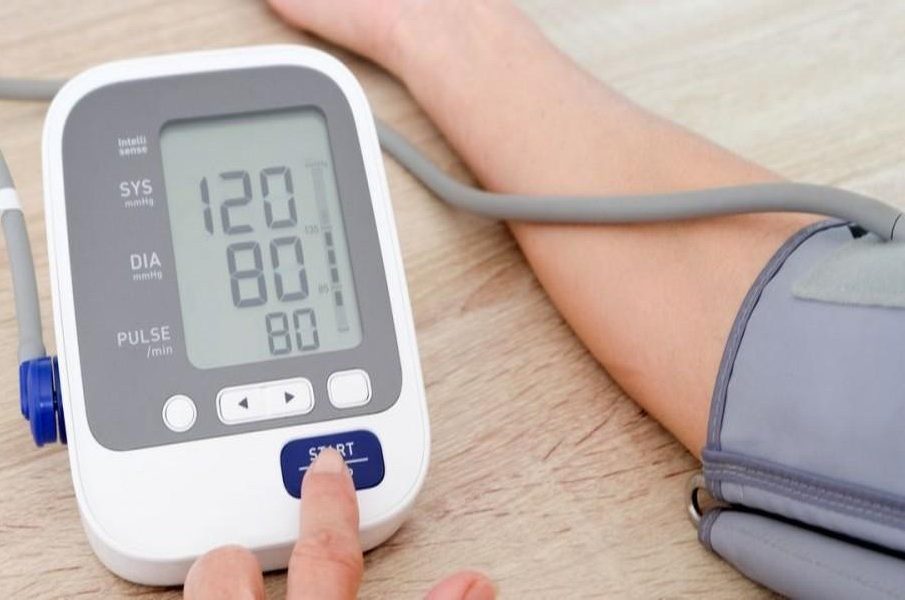
Hypertension builds slowly, often over years, without any clear signal. By the time fatigue, headaches, or breathlessness appear, the problem has usually been sitting there for a while. Checking at home changes that dynamic. It puts a consistent, low-effort way of tracking cardiovascular health directly in your hands, without scheduling an appointment every time you want a number. According to the World Health Organisation, around 1.28 billion adults worldwide live with hypertension, and nearly half of them are unaware of it. That gap is precisely where home monitoring makes a difference.
myaster carries over 40 blood pressure monitors across different categories upper arm, wrist, semi-automatic, and professional-grade, covering basic everyday use right through to clinically detailed options.
How do you pick a pressure monitor?
The difference between the upper arm and wrist blood is the size and convenience. It comes down to how reliably each one produces accurate results under normal home conditions.
Upper arm monitors are the more trusted option for daily home use. The cuff sits close to heart level naturally, which is one of the key factors in getting a consistent reading. Most models in this category also carry features like:
- Multi-reading memory that stores between 30 and 100 past results
- Average calculation across the last two or three readings
- Large backlit displays that are easy to read in low light
- Irregular heartbeat detection during each measurement
Wrist monitors are a practical alternative for people who travel frequently, have larger upper arms, or find the standard cuff uncomfortable. They are lighter and more compact, but they demand careful positioning. The wrist must be held at heart level throughout the measurement; a small deviation in angle or height can shift the reading by several points. With consistent technique, they work well. Without it, the results can be misleading.
Semi-automatic and professional-grade devices, such as aneroid sphygmomanometers, give users manual control over inflation and deflation. These are better suited to people with some clinical training or those following a structured monitoring programme recommended by their doctor.
What features on a blood pressure monitor are worth paying for?
Not every feature listed on the box changes the experience in a meaningful way. These do:
- Reading memory – Devices that store between 60 and 120 readings per user allow you to spot trends over weeks rather than relying on a single snapshot. Some models store results for two users, which is useful in shared households.
- Irregular heartbeat detection – This does not replace a formal cardiac assessment, but it does flag patterns worth raising with a doctor during routine daily checks.
- Cuff-fit indicator – A poorly placed cuff is one of the most common reasons home readings vary unexpectedly. An alert before the measurement begins removes that variable without requiring any extra effort from the user.
- App connectivity – Monitors with Bluetooth pairing allow readings to sync automatically to a smartphone app. This makes it straightforward to share a structured log with a doctor rather than recalling numbers from memory at an appointment.
- Cuff size – This is the most overlooked factor in monitor accuracy. Most standard adult cuffs fit arm circumferences between 22 cm and 32 cm. Arms outside that range need a small or large cuff, specifically. A mismatch of even a few centimetres consistently skews results, not because the device is faulty, but because the fit is wrong.
How to take a blood pressure reading?
The monitor itself accounts for only part of the accuracy. Technique and timing make up the rest. Follow these steps each time:
- Sit in a chair with back support for at least 5 minutes before measuring – not just pause, but genuinely rest
- Rest the arm on a flat surface with the cuff positioned at the same height as your heart
- Keep both feet flat on the floor and do not cross your legs during the measurement
- Avoid caffeine, smoking, and exercise for a minimum of 30 minutes beforehand
- Take two readings one minute apart and record both
- Measure at the same time each day – morning before medication and evening before bed, do cardiologists most commonly recommend the two windows
People who notice their readings varying widely from one day to the next are often surprised to learn the monitor is perfectly calibrated. In most cases, small changes in posture, timing, or pre-measurement activity are what cause the variation.





-
Body Contouring After Weight Loss: What You Need to Know
Losing weight can improve health, confidence, and daily comfort. But after major ... -
-
-
-